

A single mistranslated warning label on industrial equipment led to a $10 million product recall and three workplace injuries. The culprit? A poorly translated instruction manual that confused “stop immediately” with “pause operation.” This isn’t just about words—it’s about safety, compliance, and your brand’s global reputation. That is why you need to work with professional translation services offering technical language solutions.
What is Technical Manual Translation?
Technical manual translation converts product documentation—including user guides, safety instructions, and technical specifications—from one language to another while maintaining technical accuracy and cultural relevance. This process extends beyond word-for-word substitution to ensure that your international customers can use your products safely and effectively.
At JR Language Translation Services, we understand that translated manuals aren’t optional for global expansion—they’re essential. Poor translations can lead to product misuse, legal liability, and damage to brand credibility. For complex products in industries ranging from medical devices to manufacturing equipment, precision is crucial in technical translations.
The High Stakes: Why Manual Translation Matters
User safety is paramount. Unclear warnings or operating procedures create real danger. A mistranslated medical device instruction could have severe health consequences, while ambiguous warnings on manufacturing equipment could lead to workplace injuries.
Legal compliance carries equal weight. Many countries mandate product documentation in local languages, with non-compliance resulting in lawsuits, fines, and product recalls. For regulated industries, accurate manuals serve as critical legal protection.
Your brand reputation depends on clarity. Precise manuals build customer trust and loyalty. Poor translations erode confidence, generating negative reviews and lasting brand damage. Different industries face unique challenges—medical devices demand absolute precision, while manufacturing equipment requires clarity for the operation of complex machinery.
Understanding Your Target Audience
Effective translation requires understanding your audience’s technical background and cultural context. Regional language variations matter significantly. Canadian French differs from European French. Units of measurement (metric versus imperial) require careful handling. Local dialects and end-user skill levels influence translation approach.
Whether targeting technicians or consumers, calibrate your tone and detail level accordingly. Cultural expectations around information processing vary—some cultures prefer direct instructions while others expect detailed context.
Consequences of Poor Translation
Translation errors create cascading problems. Initially, confused users flood customer support lines, which increases costs and reduces satisfaction. Issues escalate to negative reviews, product returns, and legal action when mistranslations cause harm or violate regulations.
Brand credibility damage proves to be the hardest to repair. A viral post about translation errors can damage years of reputation-building efforts. Post-distribution error discovery can become costly and embarrassing, with recall expenses often exceeding the damage to customer trust.
Preparing Manuals for Translation Success
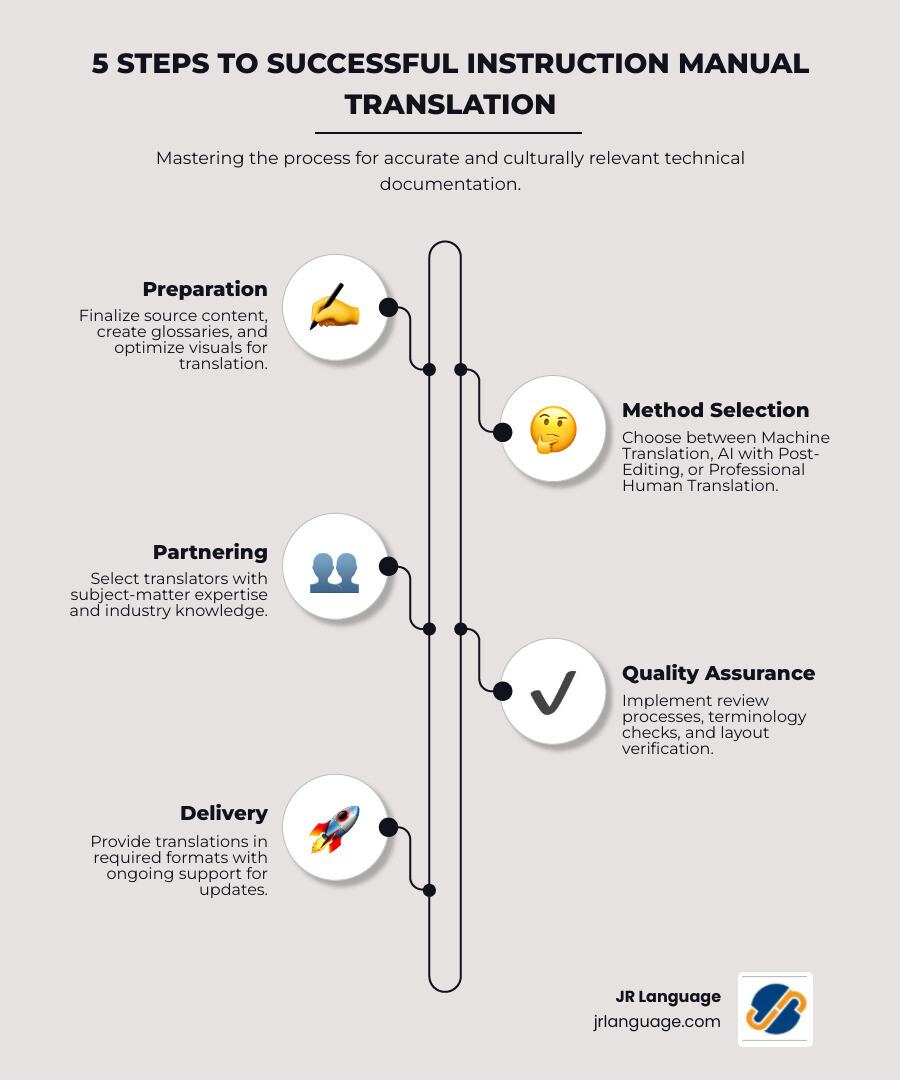
Like a pilot’s pre-flight checklist, proper preparation ensures smooth translation. Follow these essential steps:
Finalize source content first. Last-minute changes cause delays, introduce errors, and increase costs. Approve every word and diagram in the original language before translation begins.
Write for translation. Use simple, clear, concise language. Avoid jargon, idioms, and complex sentences. Maintain consistent terminology—always use identical terms for identical concepts.
Prepare editable files. Professional translation services handle a diverse range of file formats, from Microsoft Word to specialized DTP formats such as InDesign, FrameMaker, and MadCap Flare.
Leverage Visuals and Layout
Clear graphics and diagrams communicate universally across languages. However, avoid embedding text within graphics files—extraction for translation requires manual graphic design work, adding time and expense.
Leave adequate white space. Translated text typically expands by 20-30% compared to the English original. Without sufficient space, layouts become cramped and difficult to read. Generous white space accommodates expansion while maintaining a professional appearance.
Create Glossaries and Style Guides
A glossary serves as your single source of truth for specialized terminology. Include:
- Company-specific terms and industry jargon
- Acronyms and their definitions
- Terms that should NOT be translated (brand names)
- Preferred translations for key terms
Style guides outline desired tone, formatting rules, and linguistic conventions. Together, glossaries and style guides ensure accurate, consistent translations while preserving your brand voice.
Translation Methods: Choosing the Right Approach
Your content’s technical complexity, budget, and timeline determine the optimal translation method.
Machine Translation (MT)
While improved, machine translation falls short for technical documents. It delivers instant, low-cost results but produces high error rates. MT lacks contextual understanding, leading to confusing or misleading translations. For manuals where clarity is paramount, pure machine translation is too risky for public-facing materials.
AI Translation with Post-Editing (MTPE)
MTPE balances AI speed with human expertise. Modern AI engines understand context more effectively than older systems, resulting in more natural initial translations. The crucial step: professional linguist review, correction, and refinement of AI-generated drafts.
This hybrid AI translation method offers manageable costs, reliable quality, and faster turnaround than purely human translation. It’s ideal for high-volume content or tight deadlines, transforming good AI drafts into polished, accurate manuals.
Professional Human Translation
When precision matters, professional human translation is the gold standard. This approach employs native-speaking translators with deep subject-matter expertise and cultural understanding—capabilities machines cannot replicate.
These specialists understand the technical concepts behind your content, from automotive engineering to medical device regulations. They ensure that translations are technically precise and culturally appropriate, capturing nuance and adapting content for local markets while maintaining the brand’s voice.
For legally sensitive products where minor errors could lead to liability or user harm, professional human translation is crucial. While requiring greater investment, it’s necessary for safety, compliance, and brand reputation with complex or critical content.
Choosing the Right Translation Partner
Selecting the right translation company can significantly impact user safety and your bottom line. Look for these quality indicators:
Native-speaking translators understand cultural nuances and local idioms that make instructions feel natural to target audiences.
Industry expertise ensures translators speak your industry’s language. Request case studies or client testimonials demonstrating a track record with products similar to yours.
Technology That Empowers Experts
Computer-Assisted Translation (CAT) tools manage complex projects without replacing human expertise. Key features include:
Translation Memory (TM) stores previously translated sentences, suggesting them for reuse in new documents. This ensures consistency, speeds processes, and reduces long-term costs, especially for updates.
Terminology Databases (Term Bases) act as custom glossaries, storing approved translations for specific technical terms. This guarantees specialized jargon translates consistently every time.
Why Subject-Matter Expertise Matters
Technical manuals contain specialized terminology unique to each field. An electronics manual translator must understand circuits, while aerospace industry translators need aeronautical engineering knowledge. This specialized knowledge prevents misinterpretations that could lead to product malfunctions or user injuries.
Translation agencies with industry-experienced translators deliver both fluent language and expert technical understanding.
Frequently Asked Questions
What technical documents need translation beyond instruction manuals?
Comprehensive multilingual support involves translating your entire product ecosystem:
- User guides and quick-start guides
- Safety data sheets (often legally required)
- Patents and patent applications
- Software UI strings and online help systems
- Employee training materials and e-learning content
- Service manuals and maintenance guides
- Technical drawings and warranty information
Translating these documents ensures consistency, improves customer experience, and maintains legal compliance.
How do I ensure translation quality remains consistent across multiple documents?
Quality consistency requires three key elements: comprehensive glossaries with approved terminology, detailed style guides outlining brand voice and formatting standards, and translation memory systems that reuse previously approved translations. Working with a translation agency that implements these tools while using the same specialized translators for related projects ensures consistency across your documentation.
What makes technical manual translation different from general translation?
Technical manuals demand specialized knowledge beyond language fluency. Translators need a deep understanding of your industry’s concepts, terminology, and regulatory requirements. A general translator might be fluent in both languages but lack the technical expertise to convey complex engineering concepts or medical procedures accurately. This subject-matter expertise prevents dangerous misinterpretations.
Your Global Success Depends on Details
Successful global expansion hinges on details, and manual translation is critical. It impacts user safety, legal compliance, customer satisfaction, and worldwide brand trust.
Well-translated manuals demonstrate respect for customers and commitment to quality. Cutting corners puts users and reputations at risk. Professional translation is an investment in your company’s future—in safety, customer experience, and sustainable growth.
Language should never be a barrier to success. At JR Language Translation Services, we understand your manuals bridge your innovation and your customers. Our native, industry-expert translators bring linguistic precision, technical knowledge, and cultural understanding to every project.
Your products deserve perfect understanding in every language. Ready to take your technical documentation global with confidence? Contact our team today to discuss your translation needs and start your project.


