You can spend months perfecting a video. And yet, it still doesn’t reach your target. Most of the time, it is not because you did not have quality content. But rather, it’s only in one language.
You’ve got a great script, slick visuals, and a clear message. You upload it, share it everywhere, and wait for the results. But if that video only speaks English, then its potential is already being capped before it even starts.
Why Professional Video Translation Services Should Be Your Priority
That’s the bit that many businesses get wrong. It’s not just about how good the video looks. It’s about whether people across different markets understand, connect with, and respond to it. And that’s where professional translation services come in.
Need to talk to international audiences? Support multilingual teams? Make your content a whole lot more accessible?
Make video translation a part of your strategy from the get-go. You’ll then have a much better chance of overcoming language barriers. Your content receives a positive response from new markets.
In a world where video is increasingly being used for marketing, training, and communicating with people, that’s a pretty big deal.
Video translation is No Longer an Optional Extra
For some organizations, video translation used to be a nicety – something to think about later, maybe after the English version has been out for a while.
That approach won’t work anymore.
Recent research has found that nearly 9 out of 10 users turn on captions or subtitles when watching online content. 6 in 10 organizations are now localizing at least some of their video content to reach international audiences. Yet only 4 in 10 are actually translating their videos, not investing in enough resources.

Making Your Video Understandable to Non-English Speakers Is Crucial
Businesses are using video for product launches, internal training, webinars, brand storytelling, customer education, and social media campaigns. Those videos are meant to support growth. Language barriers just can’t be an afterthought.
A viewer might come across your content, be really interested in what you have to offer, and even need your service. But if they can’t fully follow the message, there’s friction straight away. And that friction can cost you attention, trust, and even the sale.
Why You Need to Translate Your Videos
If you don’t do proper translations, you’ll miss out on:
- international viewers who would otherwise be engaged
- customers in multilingual US communities who can’t read the subtitles or listen to the audio
- employees who need clear training in their strongest language
- search visibility tied to translated captions and transcripts
- a stronger emotional connection with local markets
A lot of potential just slips away quietly. You might never even know about the audience you failed to reach.
Types of Video Translation Services
Video translation is not a one-size-fits-all service. It usually involves a combination of different solutions. It all depends on what kind of content you are producing. You also need to know who you’re making it for.
Subtitles
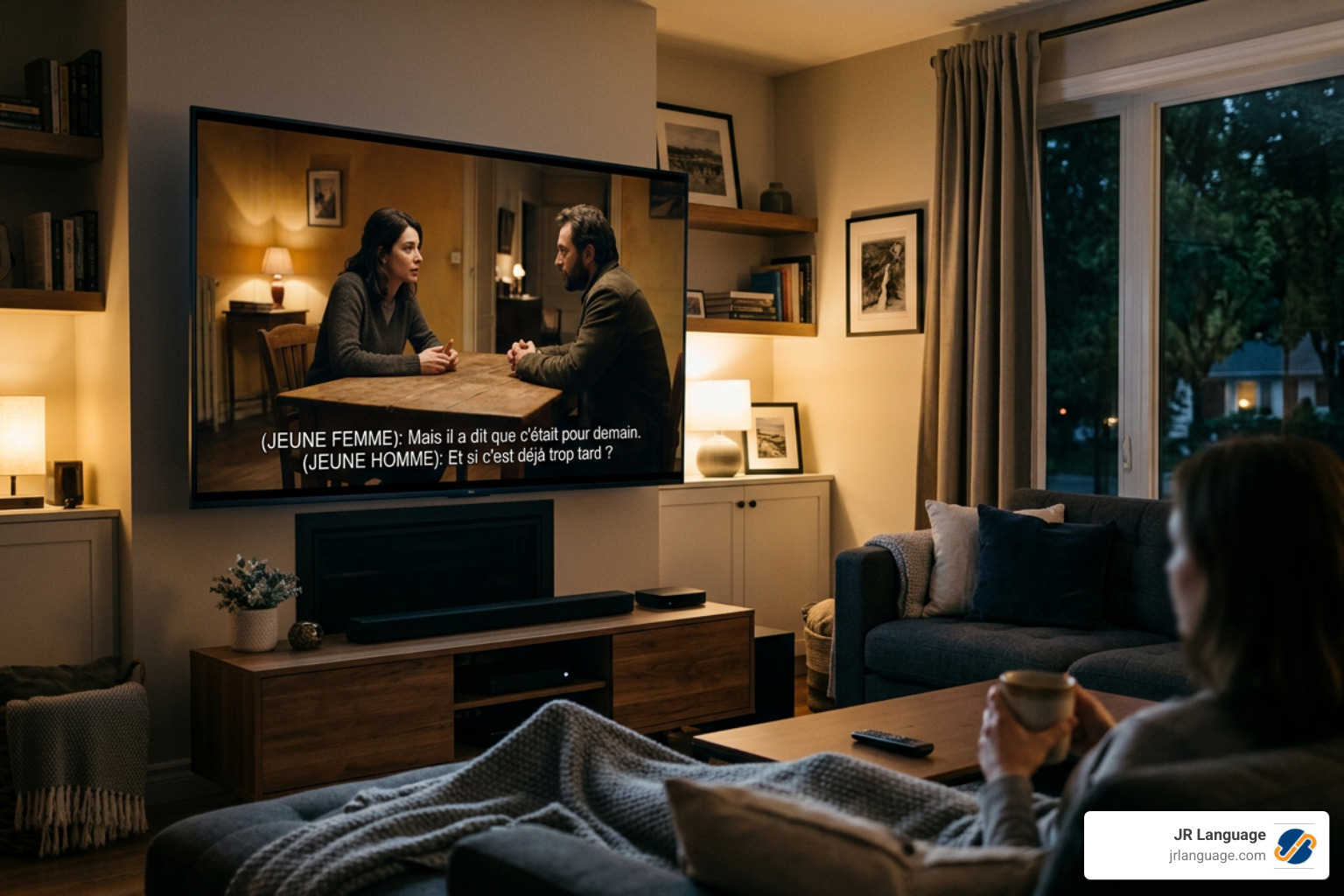
Multilingual subtitles are a good place to start. They are cost-effective, relatively quick to do, and work across most platforms.
They serve a far bigger purpose than people realize. Loads of people watch videos with the sound off, especially on social media. Subtitles are often what make the content usable in the first place.
They are particularly useful for short-form content, webinars, product demos, e-learning videos, and recorded presentations.
Making it Accessible
There’s also a difference between standard subtitles and SDH (subtitles for the deaf and hard of hearing). SDH includes sound cues and speaker identification, making the content more accessible to a wider audience.
That’s not just the right thing to do – sometimes it’s a legal requirement.
Dubbing
Dubbing services replace the original audio with a voice track in another language. This is a bigger investment than subtitles. It creates a much more immersive experience.
When viewers don’t have to split their attention between reading and watching, the message lands differently. Emotion and tone come through more naturally.
It’s a good choice for marketing campaigns, branded content, high-visibility corporate videos, and entertainment-style media.
Voice-over
Voice-over sits somewhere in the middle. With multilingual voice-overs, the original speaker can often still be faintly heard beneath the translated narration. It’s a common choice for training videos, documentaries, explainer videos, and internal communications.
It works well when you want clarity in another language while still preserving some of the original voice and atmosphere.
Transcription
Transcription services often get overlooked, but they are the foundation of almost everything else. Before a video can be subtitled, dubbed, or adapted properly, you need an accurate written transcript of what is being said. A strong transcript helps the translation process move more smoothly and reduces the risk of mistakes.
It can even support SEO. Search engines can’t index audio the way they index text. When your video content includes transcripts and captions, it’s much easier to search, repurpose, and discover.
Video Localization is Not Just Translating Words
Video localization is not just about translating English into Spanish, French, Arabic, or other languages. It’s about adapting the message to work in a new cultural and linguistic context.
Maybe that means we need to fiddle with idioms here, dial back the humor just a bit, and snip some lines to make those subtitles fit a bit more naturally on screen. We also need to swap out phrasing that just doesn’t cut it in other markets.
A direct translation can be technically spot-on but still completely wrong in context. That’s what localization is all about.
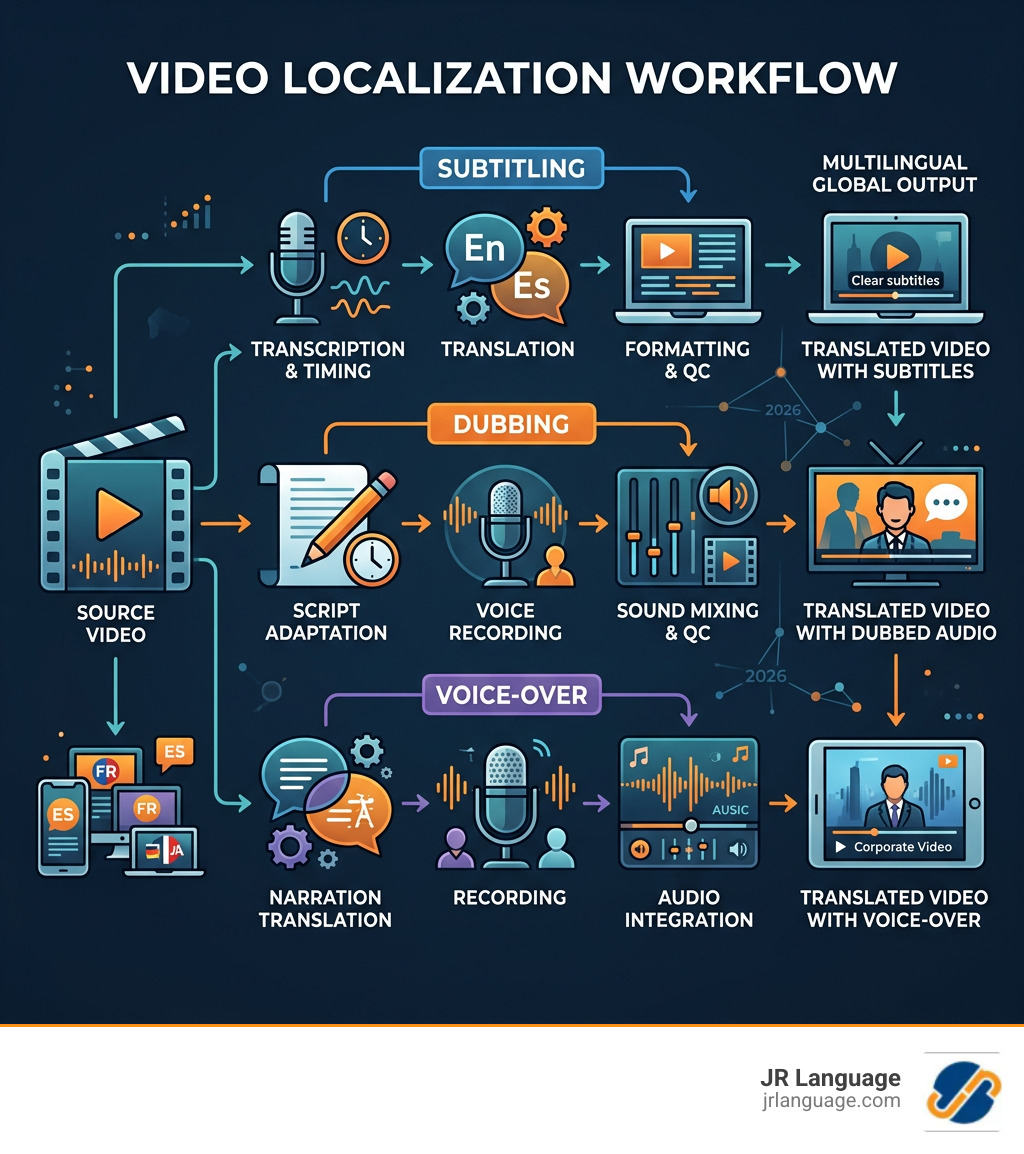
Video Translation and Localization Steps
A good process will usually have a few steps to it:
1. Getting it on paper, and time-coded too
The audio is transcribed and time-coded. We can match every line up with exactly the right moment it’s supposed to appear.
2. Translate with some care
The script is turned into another language by someone who knows both the language and the context. You need to have cultural references. Consider brand tone. Think about how easy it is to read when writing for another market.
3. Syncing it all up
Subtitles, dubbing, or voice-overs get lined up with the visuals and audio, so it all feels natural & not rushed or clunky.
4. Double-check your work
A second review helps catch any mistakes, smooth out the flow, and make sure the finished content sounds polished in the target language.
5. Get it out there
Then the files get prepared in the right format for where the video will live – YouTube, a learning platform, a website, or internal systems that need it.
Consider Confidentiality and Compliance
A lot of video content is sensitive material.
It might be internal training, executive messages, product info, legal content, or things that haven’t been released yet. Which means translation is not just about language, but also about keeping the content secure.
Using free tools or untested platforms might seem convenient, but it introduces unnecessary risks. Businesses need to carefully consider confidentiality, compliance, and file handling, especially if they operate in regulated industries.
Video Translation Services: Your Key to International Growth
At the end of the day, video translation isn’t just about people understanding the language.
It’s about expanding your business.
Seeking to reach more people? Want to make your content more inclusive? Get more value out of the videos you’re already investing in. A properly translated video helps improve communication with customers and boost engagement across markets. Your message comes across more clearly to multilingual teams.
You get the most out of your content and give it some real longevity.
Making Global Video Content Accessible
A video that only works for one audience has its limits. A video that works across languages has a whole lot more options.
If your business is already using video, translation shouldn’t be an afterthought.
Need subtitles for product demos? Voice-overs for training content? Dubbing for marketing campaigns? Transcription to help with accessibility and search visibility?
The right approach can make a big difference.
JR Language is Here to Help!
JR Language Translation Services has the support you need for video translation: subtitles, dubbing, voice-overs, and transcription. We focus on making sure your videos are linguistically accurate and culturally relevant. For companies trying to reach a wider audience, that kind of support can really make a difference.
Ready to expand your video’s reach? Request a free quote and connect with the audiences you’re currently leaving behind.