Picture this. You’re in the back watching your CEO present to international partners. The Tokyo team looks confused. Paris office seems lost. Berlin colleagues are checking their phones.
Nobody’s following along.
That’s the million-dollar miscommunication. When language barriers crash your global meeting, you’re not just losing translation. You’re losing deals. Engagement. The entire point of bringing everyone together.
Professional translation services and interpretation services solve this. Not with clunky pauses. With real-time clarity that makes language differences disappear.

What Are Conference Interpretation Services?
Conference interpretation services enable real-time communication between speakers and audiences who speak different languages.
Know The Difference
Document translations handle written stuff. Interpretation is all about spoken communication during live events.
Professional interpreters listen to someone speaking in one language and immediately convey that message in another language. Right there, in the moment.
We Help You Get What You Need
There are three main types:
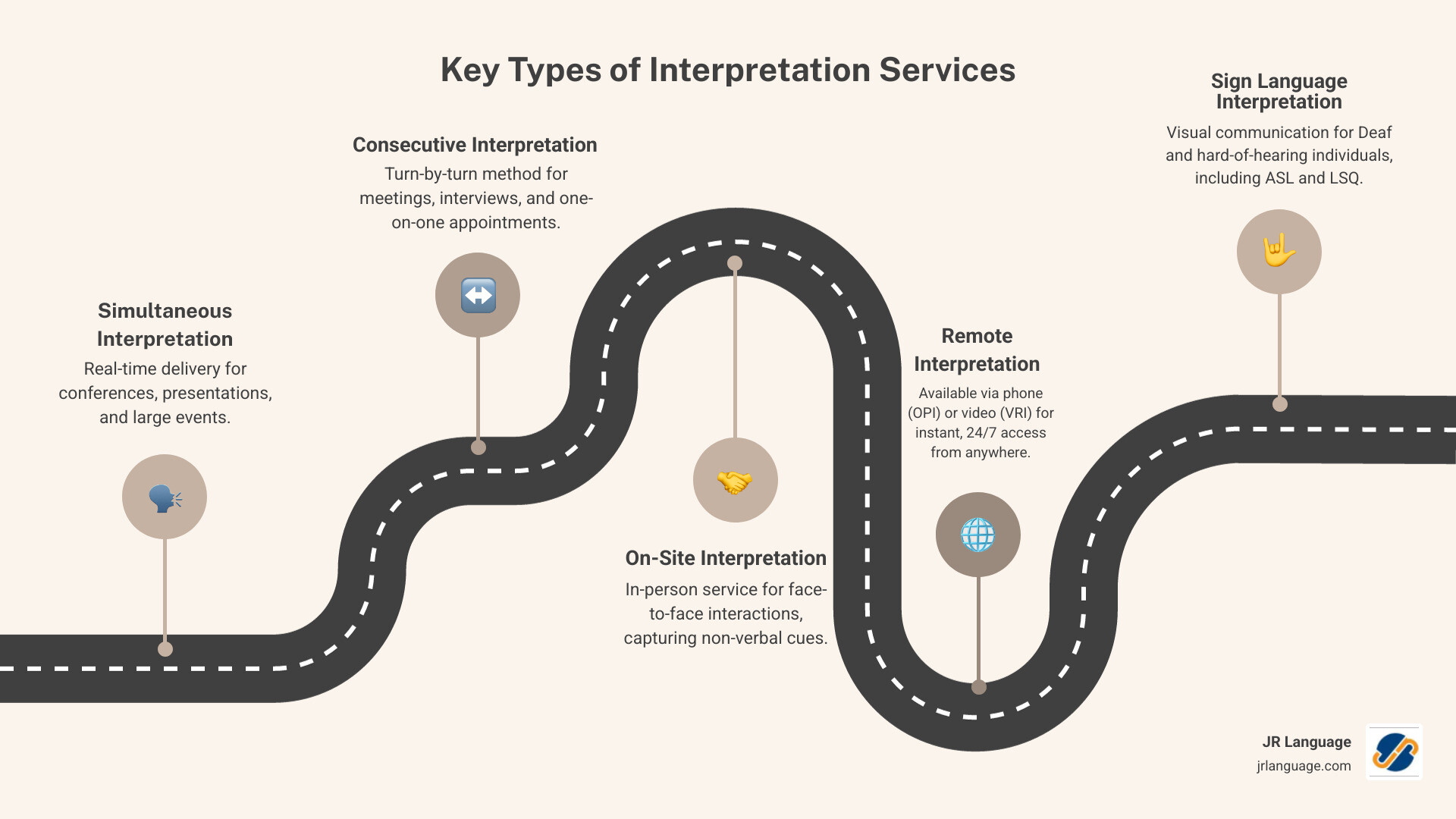
- Simultaneous interpreting: real-time, no pauses
- Consecutive interpretation: speaker pauses
- Whispered interpretation: for small groups
Why Corporate Events Need Professional Conference Interpretation
Look, global meetings aren’t cheap. You’ve spent weeks coordinating schedules across time zones. You’ve dropped serious money on the venue and technology.
And then language becomes the bottleneck.
This makes professional conference interpreting services essential. They let your teams from Tokyo, Paris, Berlin actually participate equally in strategic discussions.
What Multinational Corporations Know About Interpretation
Here’s something interesting. 62% of multinational corporations surveyed plan to expand their use of professional interpreters. Not maintain. Expand.
They’ve realized that human interpreters provide nuanced, context-aware communication that automated tools just can’t match.
When you’re negotiating a partnership worth millions, “close enough” doesn’t cut it.
How Does Simultaneous Interpretation Work?
Simultaneous interpretation is honestly pretty impressive. It happens in real-time—almost no delay. Interpreters sit in soundproof booths, listening through headphones and speaking into microphones while the speaker just keeps talking.
Your attendees wear wireless receivers tuned to whatever language they need.
Ever watched a United Nations summit? That’s simultaneous interpretation. Delegates speaking their native languages while everyone else listens through headsets. No pauses. The conversation just flows.
The Equipment and Setup
Interpreters work from soundproof booths with professional headphones and microphones. Attendees get wireless receivers to tune to their language channel.
There’s typically a one- or two-second delay while the interpreter processes and delivers the message. But compared to stopping after every few sentences? Massive time savings.
This is the gold standard for big conferences, shareholder meetings, and product launches. Your speaker presents without interruption. Everyone understands in real time.
Remote Simultaneous Interpretation for Virtual Events
Your team isn’t always in the same room. Remote simultaneous interpretation (RSI) brings that same real-time clarity to virtual platforms. Interpreters work from remote hubs with professional equipment. Your attendees join from anywhere.
Works with Zoom, Microsoft Teams, Webex, whatever you’re using. Scales from small executive sessions to massive virtual conferences.
What’s the Difference Between Consecutive and Simultaneous Interpretation?
Timing. That’s the main difference.
Simultaneous happens while the speaker is talking. Real-time. Consecutive happens in chunks—speaker talks, pauses, interpreter delivers that chunk.
Simultaneous is faster. Better for large audiences. Needs specialized equipment though—booths, wireless receivers, the whole setup.
What to Use When?
Consecutive is more personal. Works better for smaller meetings where the pause-and-interpret rhythm feels natural.
Use simultaneous for conferences with 50+ people. Use consecutive for executive meetings and small negotiations.
Consecutive Interpretation Services for Executive Meetings
Consecutive interpreting is perfect for smaller gatherings. The interpreter stands near the speaker. Your executive talks, pauses. Interpreter delivers. Then they continue. Requires serious note-taking skills—specialized symbols and shorthand. Takes longer because of the pauses, but you get a more personal, dialogue-focused dynamic.
Works well for executive briefings, board meetings with multilingual directors, small negotiations, one-on-one leadership sessions.
When Should You Use On-Site vs Remote Interpretation?
Use on-site when physical presence adds value: high-stakes negotiations, complex technical demonstrations, legal proceedings, situations where body language matters.
Remote Interpretation
Use remote when you need flexibility, faster setup, or access to specialized interpreters not in your city. More cost-effective for virtual/hybrid events too.
Remote interpreters work from professional studios with dedicated equipment. Lower logistical costs. Easier scheduling. Access to specialized experts who might not be local.
On-Site Interpretation
On-site interpreters are right there. They see everything—presentations, body language, who’s nodding, who looks confused. Can troubleshoot technical issues immediately.
Many organizations use both. On-site interpreters for the main hall. Remote interpreters for breakout sessions.

Video Remote Interpreting for Nonprofits and Social Services
Video remote interpreting (VRI) gives you immediate access to professional interpreters through video.
Refugee agency needs Arabic? Connect in seconds. Legal aid clinic needs Haitian Creole? Done.
The visual component matters. Interpreters can see documents, read facial expressions, use gestures to convey meaning.
Why Can’t You Just Use Bilingual Staff for Interpretation?
I hear this all the time. “Why can’t we just use Maria from accounting? She speaks Spanish fluently.”
Because professional interpretation goes way beyond speaking two languages. Your bilingual staff might speak Spanish perfectly in conversation. But interpreting a pharmaceutical licensing negotiation with technical precision? Medical terminology? Legal jargon?
Different skill set entirely.
Why You Need Professional Interpreters?
Many professional interpreters hold master’s degrees. Hundreds of hours of supervised practice. They understand medical, legal, technical, business terminology in multiple languages. Strict ethical codes about confidentiality and neutrality.
And here’s what most people don’t realize: they work in pairs for simultaneous interpretation. The cognitive load is intense. Research shows accuracy declines after 20-30 minutes of continuous work.
So they rotate every half hour. One interprets, the other rests and prepares. It’s the only way to maintain precision when your business outcomes depend on it.
Over-the-Phone Interpretation for Quick Connections
Sometimes you need interpretation right now. Last-minute call with Tokyo investors. Urgent supplier issue. Time-sensitive opportunity.
Over-the-phone interpretation (OPI) gives you instant access to interpreters across hundreds of languages. Call the service, select your language pair, connect within seconds.
No visual component, but when speed matters? Hard to beat. Cost-effective for shorter interactions. Many teams use OPI as backup.
Planning Your Multilingual Event Strategy
Book interpreters early—as soon as you’ve confirmed the event date.
Get them materials upfront. Share presentations, agendas, technical documents at least two weeks before. Three weeks is better.
Think through equipment logistics. Simultaneous interpretation needs soundproof booths, wireless transmitters, receivers, headsets. Don’t leave it to the last minute.
What Materials Should You Provide to Professional Interpreters?
The more you give interpreters ahead of time, the better they’ll perform.
Provide presentations, agendas, technical documents, speaker bios, specialized glossaries at least 2-3 weeks before your event.
Essential materials: presentation slides (actual content, not just titles), speaker scripts, technical terminology lists, industry-specific acronyms, background on your organization, key participant names/titles.
Interpreters use all this to research terminology and prepare glossaries. Pharmaceutical conference? They need time to research drug names, clinical trial terminology. Legal interpretation? They need to understand specific regulations being discussed.
The prep work matters.
Multilingual Communication That Strengthens Global Operations
Language interpretation services aren’t just about getting through your next conference without awkward language barriers.
They’re about building communication infrastructure that supports real global growth.
When your international teams can actually collaborate effectively, innovation accelerates. When your global partners understand your strategic direction clearly, alignment improves. When your diverse stakeholders can genuinely participate equally, decisions get better.
Work With Us Today for Your Global Events
JR Language Translation Services provides professional conference interpreters who understand your industry—not just the language, but the context and terminology. We support both on-site and remote interpretation for events of any size.
Ready to make sure every participant in your next global event can follow, engage, and contribute fully? Let’s build a language solution that works for you.